Practical Nursing Program
Practical Nursing Program
Manor's Practical Nursing Program leads to an Associate of Science degree and eligibility to sit for the National Council Licensure Examination for Practical Nursing (NCLEX-PN).
Practical Nursing Program in Jenkintown, PA
Many people are interested in working in a helping profession. Completing the practical nursing program is a way for aspiring healthcare professionals to prepare for a rewarding nursing career in two years or less. The curriculum helps students prepare for licensure as a licensed practical nurse (LPN). Learn more about the Practical Nursing program at Manor College.
What Is Practical Nursing?
Licensed practical nurses (LPNs) practice under the direction of registered nurses (RNs), physicians and other healthcare providers to provide basic, direct patient care. Some responsibilities for an LPN include:
- Taking and recording vital signs
- Administering medications
- Monitoring the status of patients
- Providing emotional support
- Keeping medical records updated
- Implementing wound care
- Relaying patient and families’ concerns to healthcare providers
The first encounter a patient has is often with the Licensed Practical Nurse (LPN). This interaction is critical because it establishes the feeling for the entire visit. Providing a safe and comfortable environment is an essential part of the LPN’s role.
LPNs are employed in various healthcare settings, including: acute care hospitals, doctors’ offices, long term care, residential care facilities, mental health centers and more. According to the U.S. Bureau of Labor Statistics (BLS), employment of licensed practical nurses is projected to grow 5% from 2022 to 2032, faster than the average for all occupations.
Manor College Enters Partnership with Saint Hubert’s, Jefferson Health
‘Health Careers in 1-2-3’ will see students from Saint Hubert’s attending healthcare classes at Manor College with guaranteed job placement after graduation with Jefferson Health.
“This program is special because it is career focused and meets a societal demand for well-prepared healthcare providers,” Dr. Joseph Gillespie, Provost, said.


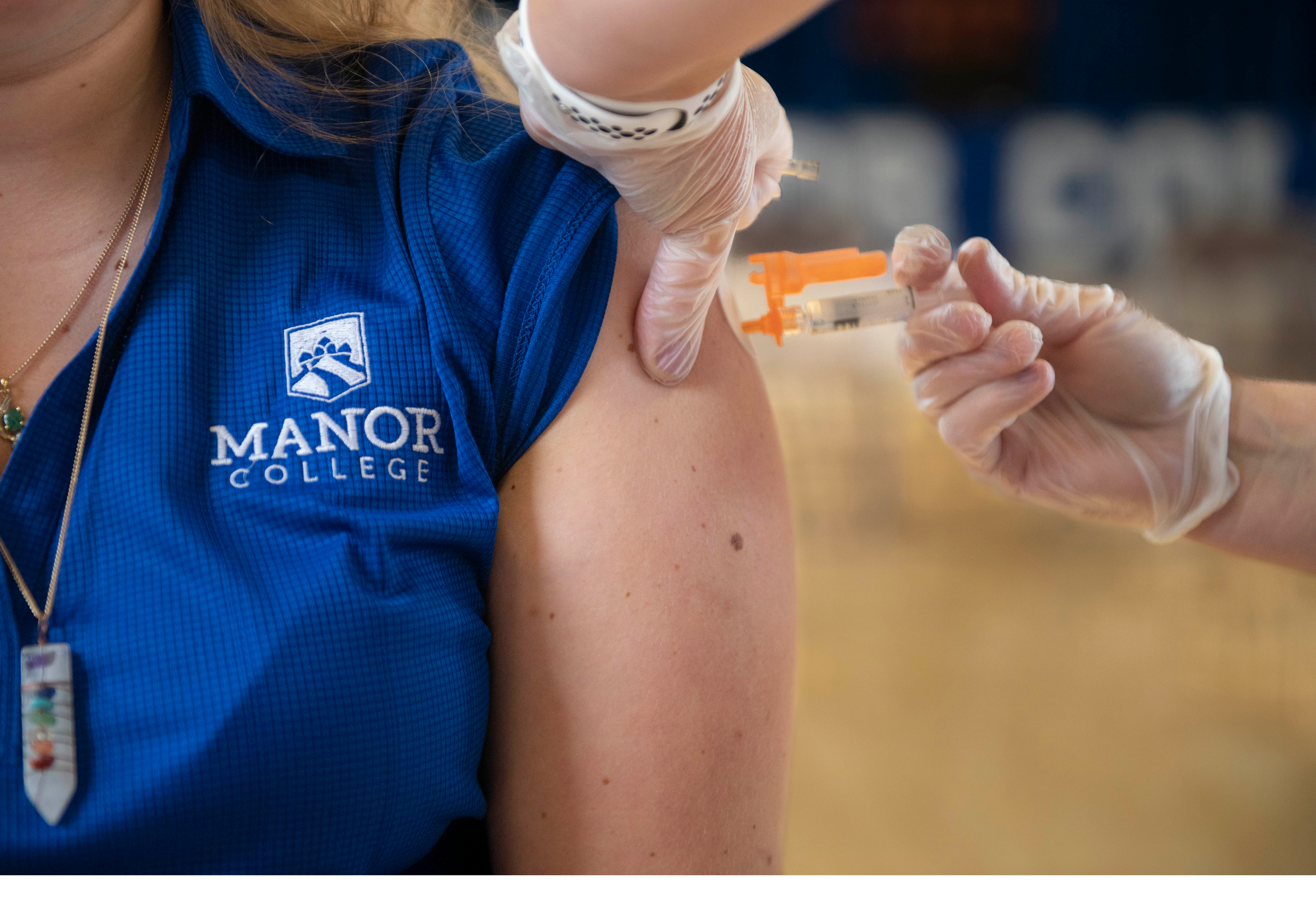
Practical Nursing at Manor College
The Practical Nursing program at Manor College, established in Fall 2023, is a 69-credit program that can be completed in 15 months. On program completion, graduates earn an Associate of Science in Practical Nursing (A.S.) degree. After finishing all required hours for the program, graduates are eligible to sit for the National Council Licensure Examination for Practical Nursing (NCLEX-PN).
Our program consists of lab and off site hands-on clinical experiences, as well as general education classes, to provide students with the information they need to begin their careers.
Students must receive a minimum grade of C+/2.33 in all courses to continue in the program.
*The Manor College Practical Nursing Program is not an evening program.
Admission Requirements
To be considered for admission into Manor College’s Practical Nursing program, students must have a high school diploma with a GPA of 2.5 (C+). Students must be placed into MH110 to start the program. If a student wishes to transfer college courses from a previous institution, all Allie Health math and science courses must have been completed within 5 years of starting Manor’s Practical Nursing program.
To apply, potential students must submit an application through the Manor Admissions Office, an essay on their interest and intent in practical nursing and will interview with the program director before an official admission decision is made. Potential students also must:
- Take a Pennsylvania Child Abuse History Clearance that indicates “no record” to participate in off-site clinical experiences
- Pass the Pennsylvania State Police Criminal Record Check with the results within the guidelines of the law
- Complete an FBI Background Check Transmittal FormA sexual misconduct/abuse disclosure release required by ACT 168 of 2014.
- If transferring from a nursing program, applicants must provide a letter indicating good standing from the previous nursing institution.
Some clinical sites may have additional requirements.

Career Opportunities
Students who complete the program successfully and become licensed practical nurses are able to support a health care team in completing nursing duties allowed under their license. These tasks include, but are not limited to, administering medications, wound care and patient education. A licensed practical nurse is a professional who provides basic care for patients. They are crucial in minimizing pain, increasing mobility, improving comfort, and generally improving overall care for patients in a variety of medical settings.
LPN’s make up the vast majority of nursing staff in the United States, and work in a variety of health care settings.
Examples of these settings are:
- Long Term Care Facilities
- Physician Offices
- Home-Health Care
- Employees Health
- Residential Care
- Community Mental Health Centers
- Detox Agencies
- Outpatient Care Facilities
- Hospitals
- Schools
- State and Local Government Agencies
Request More Information about Practical Nursing Today
Aspiring LPNs can take one step closer to their career by enrolling in the Practical Nursing program at Manor College in PA. Whether you’re a first-generation college student, a high school student, or a commuting adult student, Manor College can accommodate you and help you on your way to your healthcare career. Request more information about the Practical Nursing program at Manor College or apply today.
Practical Nursing News From Manor
- Meet the Students and Alumni Behind Manor College’s Advertising
- A Practical Nursing Graduate’s Journey Inspired by Her Son’s Diagnosis
- Manor College holds Inaugural Pinning Ceremony for Practical Nursing Graduates
- Manor College Receives Schools-to-Work Grant to Start Pre-Apprenticeship Program
- Manor Student Wins Statewide Practical Nursing Scholarship
Related Programs
Associate Degrees
Bachelor’s Degrees
Disclaimer on Essential Functions for Allied Health Programs
The Essential Functions outlined herein are distinct from academic standards and refer to the physical, cognitive, and behavioral abilities necessary for successful completion of all components of the Allied Health Division curricula.
These functions represent the fundamental skills and attributes required to perform competently and safely in both academic and clinical settings.
Students must demonstrate essential abilities in the following areas:
● Intellectual (critical thinking and decision-making)
● Motor (fine and gross motor skills for clinical procedures)
● Sensory (sufficient vision, hearing, and tactile ability)
● Communication (effective verbal, nonverbal, and written communication)
● Environmental (ability to function in diverse clinical environments)
● Behavioral and Social (emotional stability, professionalism, and interpersonal skills)
These essential functions are necessary to meet the demands of the profession and to ensure the safety and well-being of patients, colleagues, and the student. Applicants and students who are unable to meet these requirements, with or without reasonable accommodations, may be unable to progress in or complete the program.